
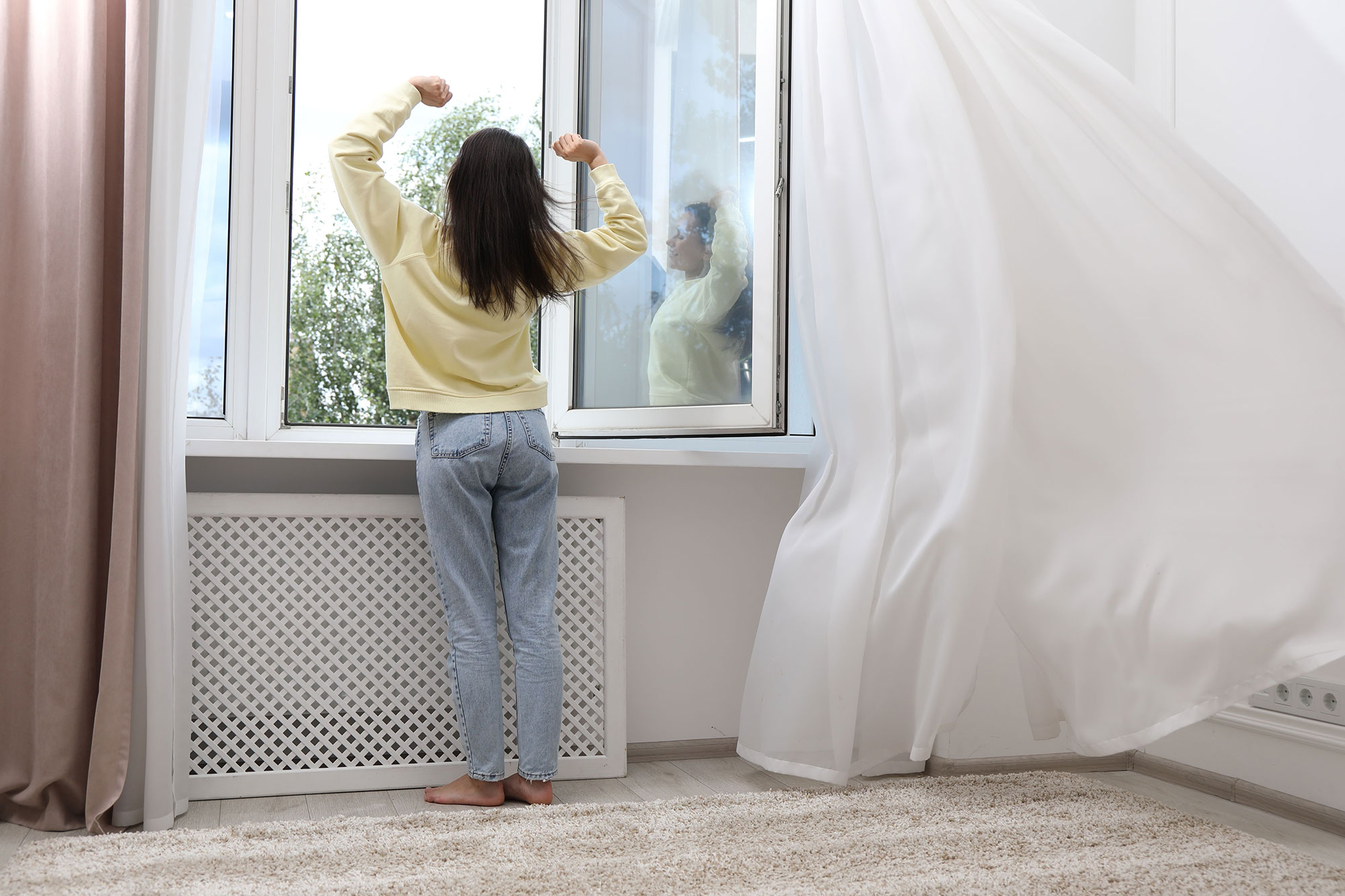
If you’ve spent even five minutes scrolling social media lately, you’ve probably seen the trend: open your windows for 5 to 15 minutes to “burp” your house. The idea is simple — flush out stale indoor air and let in fresh air from outside.
The concept comes from a European practice known as lüften, which involves short, intentional bursts of ventilation to improve indoor air quality. In cooler, drier climates, this works beautifully. In Spring, Texas, however, things get a little more complicated.
Our climate adds one major variable into the mix: humidity.
So while “house burping” can sometimes improve indoor comfort, it can just as easily make your home feel sticky, uncomfortable, and harder for your HVAC system to manage. Let’s unpack what house burping actually does, when it makes sense in Southeast Texas, when it doesn’t, and how your HVAC system can often do the job far better.
What Is “House Burping,” Really?
At its core, house burping is nothing more than rapid ventilation. You open windows — ideally on opposite sides of the home — to create a cross breeze that pushes stale air out and pulls fresh air in.
- The goal is to reduce:
- Stale indoor air
- Lingering odors
- Excess indoor pollutants
- Trapped moisture
In cold or mild climates, this quick air exchange is efficient and effective. The temperature difference between indoors and outdoors creates strong airflow, flushing the house quickly. Windows get shut before the indoor temperature drops too much, keeping energy losses low.
But in Spring, Texas, outdoor air usually arrives pre-loaded with moisture, and sometimes pollen, pollution, and heat — which changes the math completely.
The Houston-Area Reality: Fresh Air Comes With a Humidity Tax
For much of the year, outdoor air in Spring and the greater Houston area contains high moisture levels. When you open windows, you’re not just letting in oxygen-rich air — you’re also inviting in humidity that your HVAC system must then remove.
This often leads to:
- A clammy, sticky indoor feeling
- Longer HVAC run times
- Reduced comfort even when temperatures are correct
- Potential moisture buildup that encourages mold growth
In other words, while the air may feel “fresh” for a few minutes, the long-term comfort impact can be negative.
That doesn’t mean house burping is useless here. It simply means timing and purpose matter.
When House Burping Actually Helps in Spring, TX
There are moments when opening windows makes perfect sense — even in a humid climate.
After heavy cooking is a great example. Frying, searing, and strong spices can leave odors lingering long after dinner is done. A brief window flush clears that air faster than any fan or filter.
Cleaning is another moment where quick ventilation helps. Many household cleaners and disinfectants release volatile organic compounds (VOCs) that contribute to indoor air pollution. A short burst of outside air can reduce their concentration.
On rare mild, low-humidity days — which do happen in spring and fall — opening the house for 10 minutes can refresh the space without introducing significant moisture.
Finally, homes that are very airtight, especially newer construction or spray-foam insulated houses, can feel stale without some form of ventilation. In those cases, occasional controlled window ventilation may provide temporary relief.
When House Burping Can Make Things Worse
Unfortunately, in Southeast Texas, these situations are far more common.
On hot and humid days, opening windows often introduces more moisture than your HVAC system can comfortably manage. This results in a damp, sticky feeling that no thermostat adjustment seems to fix.
During pollen season, open windows quickly fill your home with allergens, triggering sneezing, itchy eyes, and respiratory irritation — especially for allergy sufferers.
On days with poor outdoor air quality, wildfire smoke, or high ozone levels, opening windows may actually degrade indoor air quality rather than improve it.
There’s also a more serious concern: pressure imbalance. Homes with multiple exhaust fans, clothes dryers, and combustion appliances like gas furnaces or water heaters can develop negative pressure. This condition can cause combustion gases to be pulled back into the living space instead of safely venting outside. In those situations, random window ventilation can worsen airflow instability rather than fix it.
Why Your HVAC System Is Better at “Burping” Your House
House burping is a form of ventilation — and modern HVAC systems are far better equipped to manage ventilation safely and comfortably.
Instead of uncontrolled outdoor air pouring through windows, HVAC-based ventilation introduces measured amounts of fresh air while controlling temperature, humidity, and filtration.
A properly designed HVAC system can:
- Regulate indoor humidity while adding fresh air
- Filter incoming air to remove dust, pollen, and pollutants
- Maintain consistent pressure balance throughout the home
- Prevent backdrafting of combustion appliances
- Improve comfort in every room
This is why many newer homes use controlled fresh air ventilation strategies instead of relying on open windows.
Humidity: The Real Villain Behind Most Comfort Problems
In Spring, Texas, humidity is responsible for most indoor comfort complaints. High humidity makes the air feel warmer, heavier, and less comfortable even when temperatures are technically correct.
Excess moisture also encourages:
- Mold and mildew growth
- Musty odors
- Dust mite proliferation
- Wood swelling and warping
- Reduced HVAC efficiency
If humidity is a recurring issue in your home, opening windows rarely helps. In fact, it almost always makes it worse.
This is where proper HVAC sizing, duct sealing, airflow balancing, and dehumidification become essential. Many comfort problems blamed on “old air” are actually moisture management issues in disguise.
A Smarter Way to Think About Indoor Air in Southeast Texas
Rather than asking, “Should I open my windows more?” the better question is, “Is my HVAC system managing ventilation and humidity correctly?”
If your home consistently feels stuffy, humid, or uncomfortable, there’s likely a mechanical solution that works better than window ventilation.
Professional HVAC evaluations often uncover:
- Leaky return ducts pulling hot attic air into the system
- Poor airflow distribution between rooms
- Oversized systems that cool quickly but fail to dehumidify
- Undersized systems that run constantly and never catch up
- Improper ventilation design
When these issues are corrected, homes often feel fresher, drier, and more comfortable — without ever touching a window.
Simple Guidelines for Homeowners in Spring, TX
If you still want to use house burping occasionally, keep it strategic.
Short bursts work best. Five to ten minutes is plenty for odor removal or quick air exchange. Leaving windows open for extended periods usually introduces too much moisture.
Choose your timing carefully. Midday during dry weather is ideal. Early morning and evening often carry higher humidity.
Pay attention to how your home responds. If you notice sticky air, condensation, or musty smells afterward, window ventilation likely isn’t serving you well.
Most importantly, don’t rely on open windows to solve ongoing comfort problems. If humidity, odors, or stuffiness are persistent, your HVAC system likely needs attention.
House “Burping” HVAC Calculator
Enter your home’s age and check what you’re dealing with. This tool gives a quick recommendation on whether short window-venting is fine or if HVAC ventilation / dehumidification should be on the table.
Signs Your Home Needs HVAC Solutions, Not Open Windows
If any of the following are common in your home, a professional HVAC evaluation will likely produce better results than window ventilation:
- Your home often feels humid or clammy even when the AC is running.
- Odors linger long after cooking or cleaning.
- Certain rooms feel stuffy while others are comfortable.
- Dust builds up unusually fast.
- Allergy symptoms worsen indoors.
- You suspect airflow imbalance, pressure issues, or inconsistent temperatures.
These problems usually stem from airflow, duct design, humidity control, or ventilation configuration — all areas where professional HVAC adjustments can deliver lasting improvements.
Final Thoughts: House Burping Is a Tool, Not a Strategy
In Spring, Texas, opening windows is occasionally helpful, sometimes harmless, and often counterproductive.
Short, controlled ventilation can clear odors and refresh air on mild days. But for true comfort, healthy air quality, and humidity control, your HVAC system is the real workhorse.
At Majestic AC, we help homeowners create indoor environments that stay comfortable year-round — not just for a few minutes after opening a window. Whether it’s airflow balancing, duct sealing, humidity management, filtration upgrades, or ventilation design, we focus on making your home breathe smarter, not harder.
If your home feels sticky, stuffy, or uncomfortable, we’re happy to help you uncover why — and fix it at the source.