
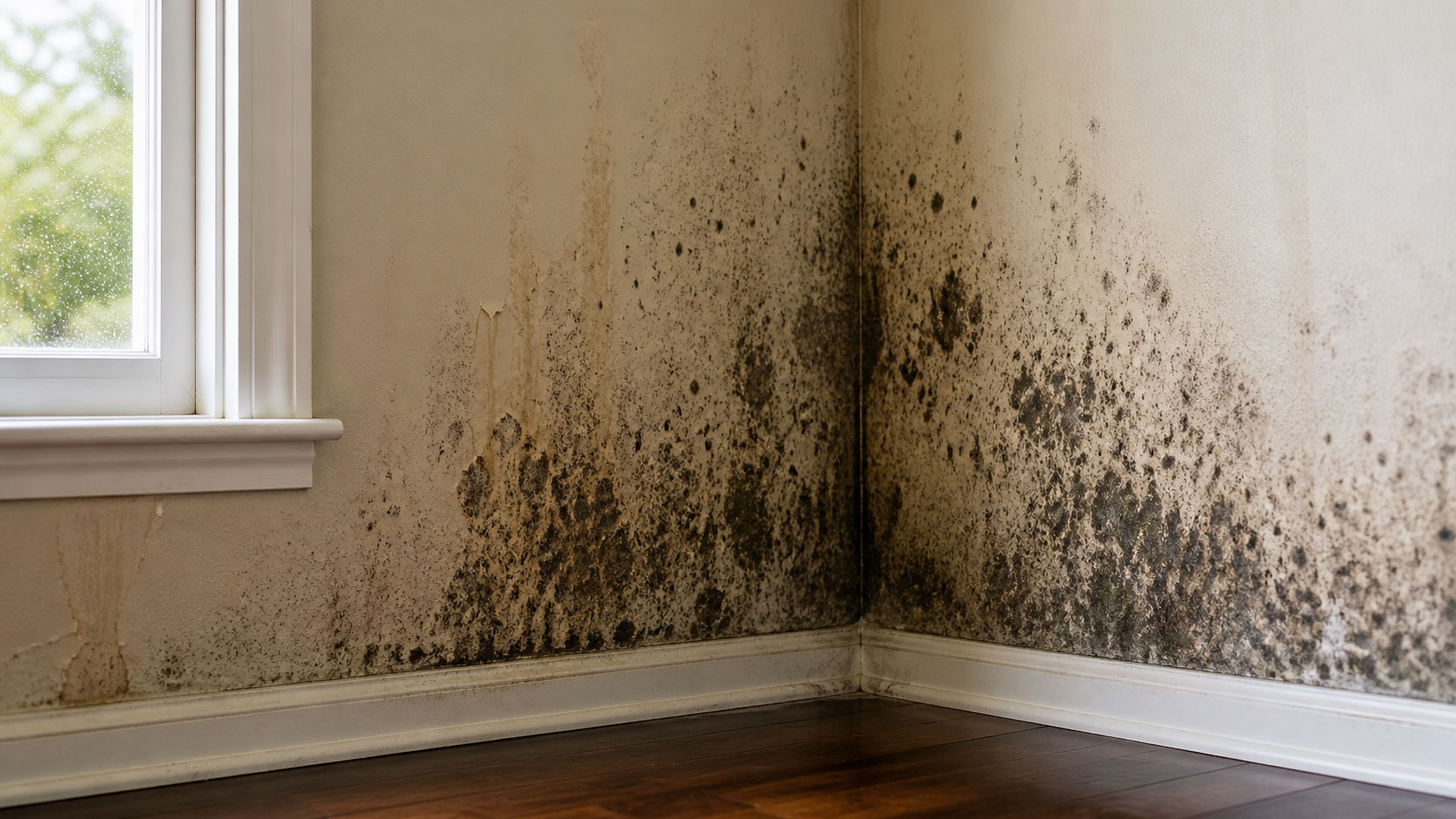
Ask any HVAC technician who has worked in both Houston and, say, Phoenix or Denver, and they’ll tell you the same thing: air conditioning systems in Southeast Texas age differently. They wear faster, fail in specific and predictable ways, and require a level of attention that homeowners in drier climates simply don’t deal with. The reason isn’t mysterious. It’s humidity — relentless, year-round, Gulf Coast humidity that your AC system fights against every single day it operates.
Spring, Texas sits in one of the most persistently humid corridors in the continental United States. Relative humidity regularly exceeds 70% for months at a stretch, and the combination of heat and moisture that defines our summers creates operating conditions that push residential HVAC equipment hard. Understanding exactly how humidity damages your system — and what you can do to slow that process — is some of the most practically valuable knowledge a Spring-area homeowner can have. It affects how long your equipment lasts, how much you spend on repairs and energy, and how comfortable your home actually feels even when the thermostat reads exactly where you set it.
Your AC Is Fighting Two Battles at Once
Most homeowners think of air conditioning as a cooling technology, which it is — but in a climate like ours, it’s equally a dehumidification technology, and that second job is where much of the wear originates. When warm, moisture-laden air from your home passes over the cold evaporator coil inside your air handler, two things happen simultaneously. The air loses heat — that’s the cooling part — and moisture condenses out of the air onto the coil surface, drips into the drain pan below, and flows out through the condensate drain line. That’s the dehumidification part.
In a dry climate, this dehumidification function is almost incidental. The air simply doesn’t carry enough moisture for condensate management to be a significant factor in system wear. In Spring, Texas, it’s a major ongoing mechanical process that runs for the better part of eight months a year. Every component involved in that process — the evaporator coil, the drain pan, the condensate drain line, and the safety switches that protect against overflow — is under continuous stress in ways that have no real equivalent in lower-humidity regions. When any one of those components starts to fail, the consequences can range from reduced cooling efficiency to water damage in your ceiling or attic before you ever notice something is wrong.
What Humidity Does to Your Evaporator Coil
The evaporator coil is the heart of your indoor air conditioning system, and it takes the most direct punishment from our humid climate. Because this coil is perpetually cold and perpetually wet during cooling season, it creates ideal conditions for biological growth — mold, mildew, and algae that colonize the coil surface and the drain pan beneath it over time. Even modest biological buildup on the coil fins reduces heat transfer efficiency, which means your system has to work harder and run longer to achieve the same cooling result. In severe cases, a heavily fouled coil can reduce system efficiency enough to show up clearly on your monthly energy bill.
Beyond biological growth, the constant moisture cycling — wet during operation, drying out when the system is off — accelerates corrosion on the coil itself. This is compounded by a phenomenon called formicary corrosion, which occurs when trace amounts of organic compounds in the air react with copper in the presence of moisture to form formic acid, slowly eating microscopic pits into the copper tubing. In dry climates, this process is barely a concern. In Southeast Texas, where humidity levels are consistently high and homes are often tightly sealed with off-gassing materials, formicary corrosion is one of the leading causes of refrigerant leaks in systems that are otherwise well-maintained and nowhere near the end of their expected service life.
A pinhole refrigerant leak from coil corrosion is insidious because it develops slowly. Your system doesn’t stop cooling overnight — it gradually loses efficiency over weeks or months as the refrigerant charge drops. By the time you notice that your home isn’t quite cooling the way it used to, the damage is already done. Annual coil inspections during a professional tune-up are the best early warning system against this kind of slow-developing failure.
The Condensate Drain: Small Line, Big Consequences
Of all the humidity-related problems we service in Spring-area homes, clogged condensate drain lines are by far the most common. This is the pipe — typically three-quarters of an inch in diameter — that carries the water collected from your evaporator coil out of your home, usually draining either into a utility sink, to the exterior of the house, or into the municipal sewer system. In a humid climate, a functioning residential AC system can remove anywhere from five to twenty gallons of water from the air per day during peak summer operation. All of that water has to go somewhere, and it all flows through that single small pipe.
The warm, dark, perpetually moist interior of a condensate drain line is a perfect environment for algae growth, and in Southeast Texas it doesn’t take long for that growth to accumulate enough to partially or fully obstruct the flow. A slow drain backs up into the drain pan. When the pan fills, it trips the float safety switch, and your AC shuts off — which is actually the system working exactly as designed to prevent water damage. But many homeowners don’t realize this is what happened, and simply reset the system without clearing the drain, setting up a cycle of repeated shutoffs. In homes without a properly functioning safety switch, a clogged drain overflows directly, and the water damage to attic insulation, drywall, and ceilings can be extensive and expensive.
The solution is straightforward but requires consistency. Condensate drain lines should be flushed and treated with an anti-algae solution at least once a year — something every Majestic AC technician does as a standard part of our tune-up service. Some homeowners in particularly humid parts of our area benefit from doing a simple vinegar flush themselves every few months between professional visits, which is as easy as pouring a cup of white vinegar into the drain access port near the indoor unit and letting it sit for 30 minutes. It’s not glamorous maintenance, but in a climate like ours, it’s one of the most cost-effective things you can do to avoid an unexpected shutdown.
How Humidity Attacks Your Outdoor Unit
The damage isn’t limited to the indoor components. Your outdoor condenser unit faces its own set of humidity-driven challenges that are specific to the Gulf Coast environment. The steel cabinet that houses the condenser is subject to accelerated rust and corrosion from persistent moisture exposure, particularly in the months when dew points are highest — which in Spring, Texas means most of the year. Cabinet rust is largely cosmetic, but corrosion that reaches the electrical components inside the cabinet is not, and we see it regularly in systems that have gone without attention for several seasons.
The condenser coil fins — the tightly packed metal fins that line the exterior of the outdoor unit — are particularly vulnerable in our climate because they collect not just moisture but the cottonwood, pollen, and airborne debris that are abundant in the Spring area during spring and summer. Wet debris packs into the fins and holds moisture against the metal surface, accelerating corrosion and reducing the airflow that the condenser needs to expel heat effectively. A condenser coil that can’t breathe properly forces the compressor to work against elevated head pressure, which is one of the most direct paths to compressor failure — the single most expensive component replacement in a residential AC system, often running $1,500 or more even before labor costs.
Keeping the area around your outdoor unit clear of vegetation, rinsing the coil fins with a gentle garden hose spray a few times during the cooling season, and having a technician professionally clean the coil annually are the primary defenses against this class of outdoor unit deterioration.
The Electrical System Isn't Immune Either
Humidity and electrical components are a well-documented bad combination, and your HVAC system has a significant amount of electrical infrastructure that lives in environments where moisture exposure is elevated. Capacitors — the cylindrical components that provide the start-up and run voltage for your compressor and fan motors — are particularly vulnerable to humidity-accelerated failure. The capacitor in your outdoor unit lives in a metal cabinet that gets hot, cools down, and cycles through this temperature range dozens of times a day during operation, and the moisture that infiltrates during these cycles degrades the internal dielectric over time.
Capacitor failure is one of the most common service calls we run across the Spring area during summer, and while it’s a relatively inexpensive repair when caught promptly, a failed capacitor that goes unaddressed can allow the compressor to continue trying to start without the voltage support it needs — a condition that burns out the compressor winding over time. Catching a weak capacitor during a spring tune-up, before the peak season begins, is dramatically cheaper than the chain of failures that follows if it’s ignored.
Electrical contacts and wiring connections throughout the system are also subject to moisture-related corrosion that increases resistance in the circuit, generates heat, and can eventually cause intermittent failures or complete circuit faults. This is another category of issues that a thorough annual inspection catches early, when it’s a cleaning or tightening job, rather than after it has become a component replacement.
What Your Home Feels Like When Dehumidification Fails
There’s a comfort dimension to all of this that goes beyond equipment longevity and repair costs. When your AC system is compromised by humidity-related wear — a fouled coil, low refrigerant from a slow leak, or a system that was undersized and can’t fully dehumidify the air — the result isn’t always a home that’s obviously too warm. Often the result is a home that’s at the right temperature but feels wrong. Clammy. Sticky. The kind of indoor environment where you feel like you need a shower shortly after getting out of one.
This is because thermal comfort is as much about humidity as it is about temperature. At 72 degrees and 65% relative humidity, most people are uncomfortable. At 72 degrees and 45% relative humidity, the same temperature feels genuinely pleasant. A healthy, properly functioning AC system in Spring, Texas should be managing both of these variables simultaneously. When it isn’t — whether because of wear, improper sizing, or a system that simply can’t keep up with our climate — the gap shows up in how your home feels every day, not just in your energy bill or your repair invoices.
For homeowners whose systems are maintaining temperature but losing the battle on humidity, a whole-home dehumidifier integrated into the HVAC system is often the most effective solution. Unlike portable room dehumidifiers, a whole-home unit processes all of the air in the house through the existing ductwork, maintains a consistent humidity setpoint automatically, and drains continuously without requiring you to empty a tank. In a climate like ours, this equipment isn’t a luxury — for many homes, it’s the difference between genuinely comfortable air and air that’s merely cool.
A Maintenance Schedule Built for Our Climate
The standard HVAC maintenance advice — change your filter regularly and have the system serviced once a year — is a reasonable baseline for most of the country. In Spring, Texas, it’s a minimum, not a complete strategy. Our climate calls for a maintenance approach that accounts for the specific ways humidity accelerates wear on every part of the system.
Filters should be checked monthly and replaced as soon as they show visible loading — not on a fixed schedule that ignores actual conditions. Condensate drain lines should be treated with anti-algae solution at every professional service visit and flushed periodically in between. The outdoor unit should be visually inspected at the start of every cooling season and rinsed clean after any extended period of heavy pollen or debris accumulation. And a professional tune-up should happen every spring, before the heat arrives, specifically to catch the humidity-related wear that accumulates over a full year of Gulf Coast operation.
Majestic AC’s Crown Club maintenance plan is built around exactly this philosophy. Members receive two professional tune-ups per year — spring and fall — with condensate drain treatment, coil inspection, refrigerant charge verification, electrical component testing, and a written assessment of system health at every visit. In a climate that’s as hard on HVAC equipment as ours, having a professional set of eyes on your system twice a year isn’t an indulgence. It’s the most cost-effective way to protect an investment that typically costs between $8,000 and $15,000 to replace.
The Bottom Line for Spring Homeowners
Humidity in the greater Houston area is not a background condition your AC system quietly tolerates. It is an active force that works against every major component in your system — the coil, the drain, the electrical components, the outdoor unit, and the compressor — in ways that are accelerated, compounding, and largely preventable with the right maintenance approach. The homeowners who understand this and act accordingly get more years out of their systems, spend less on repairs, and live in genuinely more comfortable homes. The ones who treat their AC like a set-it-and-forget-it appliance tend to find out about humidity’s effects the hard way.
If your system hasn’t been professionally serviced this year — or if your home feels humid even when your AC is running — give Majestic AC a call at (281) 376-2224 or schedule online. We’ve been servicing HVAC systems in Spring, Texas for over three generations, and we know exactly what our climate does to this equipment. Let us take a look before the damage adds up.